

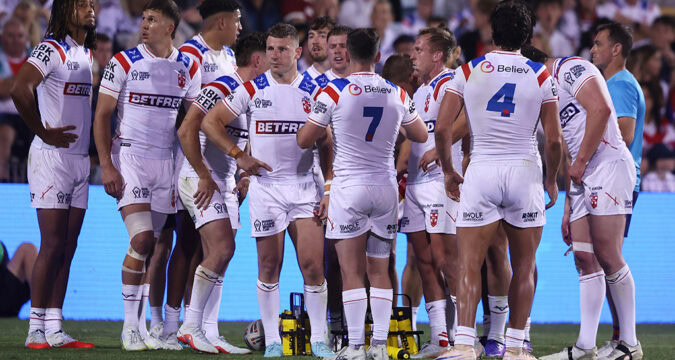
THE Rugby Football League will call on some of the greatest players in England’s modern history to set a new course for the game following an unprecedented World Cup failure.
Paul Sculthorpe, Adrian Morley and Gareth Ellis are among the icons who will come together in the wake of the men’s team failing to make it out of group stage.
And Jodie Cunningham, freshly retired after captaining England’s women as they too missed out on the semi-finals, will provide her perspective.
More names will soon be confirmed to join an exercise that is set to not only assess the performance of the England teams but analyse the whole pyramid from the grassroots up and consider the size and quality of the player pool.
In both the men’s and women’s games, the World Cups have highlighted an increasing shift in power towards the Pacific, and nations packed with players from the NRL and NRLW competitions.
Recently-appointed RFL chief executive Ian Nolan said: “There are plenty of mitigating reasons why (the men’s team) failed to reach the knockout stages, many of which were out of our control, such as travel itineraries and format of the competition, but we can’t use these as excuses.
“Likewise, we were also criticised for what happened with the TV rights and the tournament going behind a paywall (with Premier Sports). We had no control over who the rights were sold to. However, television is an important element of capturing the imagination of the next generation.
“This analysis of our national game will be all-encompassing, including how we can influence media rights, balancing reach and revenue, and attracting new audiences.
“But on the pitch, we must look at why we have consistently struggled to make our mark on the world stage for more than half a century; this isn’t just a recent problem.”
Of the women’s game, Nolan added: “Grassroots investment only started a few years ago. We’ve started that journey.
“We’re very much building for the next World Cups – the average age of our squad was just 21 – but the groundwork is starting to pay off.
“The panel will help us form some big decisions and changes. Those decisions might need the support of the entire game, and progress won’t be achieved overnight. These will be changes that pay off in four, eight, ten years’ time.
“The input from the panel gathered together will be pivotal in giving us some of the answers we need and the thinking required to enable us to reach our on-field objectives.”