
ONE OF the truths about modern sport is that fans like to focus on and identify with individuals.
And that is true whether we are talking about sports actually based on individual performances, such as golf, tennis or motor racing, or team sports, such as the various football codes or cricket.
Even in a team game, fans love to pick out individual players, whether it’s prolific goalscorers or tryscorers, or even players who are lucky enough to be born with particularly good looks.
In the recent Rugby League World Cup, we saw this tendency in the very first game of the tournament, when so much of the media’s focus was on the two full-back superstars Kalyn Ponga and Reece Walsh.
The great thing for rugby league in Australia and New Zealand is that most of the viewers would have known already about Ponga and Walsh, and they would be receptive to the coverage of those two players, as well as other high-achieving players, such as Jake Bostock, the Australian debutant who scored three tries for the Aussies and no doubt increased his future contract value significantly.
The problem facing the game’s administrators in the northern hemisphere is how to get Super League players the same degree of prominence that players enjoy down under.
For example, Ryan Hall retired at the end of the 2026 season. He was the oldest player in Super League at the age of 38, having made his debut in 2007 at that year’s Magic Weekend in Cardiff.
Ryan has enjoyed an amazing career and, until being overtaken by Josh Charnley earlier in the year, he was the greatest tryscorer in the Super League era.
His decision to retire should have generated features in the national media, and he should have been in high demand for interviews to talk about his achievements.
I’m sure there were some features about him, but not in the volume we would have seen if Ryan had been a famous footballer or even rugby union player.
In rugby league we just don’t get that degree of coverage.
But how can we change the perception of our sport so that players as individuals get the recognition that they deserve?
It won’t be an easy process.
One avenue to explore more fully is giving our leading players a greater presence on the various forms of social media that now abound in our society.
We have all heard of so-called influencers, who can spread short-form video clips virally to be watched by millions of people.
I’m quite certain that Ian Nolan, the new chief executive of the Rugby Football League, who has a considerable degree of expertise in social media, won’t need me to tell him how important such a campaign might be in raising the profiles of our leading stars.
But I would like to make one small suggestion that might go some way to shifting the focus onto our leading players, as opposed to clubs, as the season unfolds.
How about having a league table for players as well as a league table for clubs?
In other words, why not have a table that lists players’ winning percentages in games that they have played during the season?
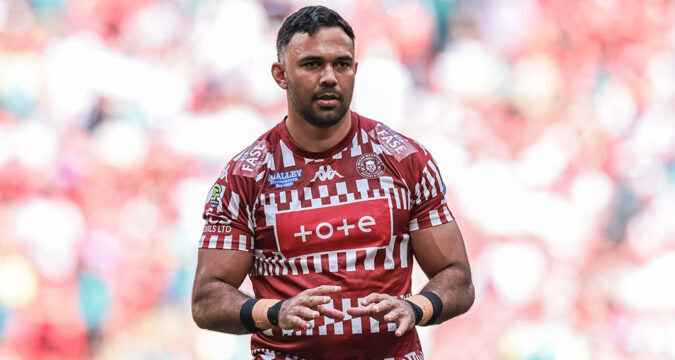
I was tempted to make this suggestion when looking at the remarkable record of Wigan star Bevan French, who is arguably the most watchable player in Super League because of his combination of pace and skills.
To illustrate the point, let’s reflect on the fact that this season Wigan played 27 regular-season Super League matches and won 22 of them to win the League Leaders’ Shield.
That represents an 81.48 percent success rate.
Bevan French had an injury that kept him out of action from early March until the end of May. He played in 15 of those 27 games but, quite remarkably, he had a 100 percent winning record. Wigan didn’t lose a single game in the regular season when he was on the field. In fact, the only game they lost when French was selected was the play-off semi-final defeat to Wakefield Trinity.
In 2025 French played 18 Super League games for Wigan, winning 15 of them, for a success rate of 83.33 percent.
Wigan won 21 out of 27 games, giving them a success rate of 77.78 percent.
So those figures confirm the view that Wigan generally have more chance of winning games when French is playing for them.
But what about a comparison with other leading stars from other clubs?
England captain George Williams only played in twelve Super League games in the regular season for Warrington. And he had nine wins in those games, giving him a success rate of 75 percent, compared to Warrington’s 20 wins from 27 games, which gives the Wire a success rate of just over 74 percent.
Jake Connor, who in my view should have been in the England World Cup squad, played in 26 of the Rhinos’ 27 games in the regular season, with a success rate therefore mirroring that of the club, which in his case was almost 77 percent, slightly ahead of George.
What would be interesting in a league table of players would be to see which players were performing better than their club’s average and which would be worse.
Of course, any player who played in every game during the season would have an identical record to that of his club.
But it would also be interesting to see whether there were any unexpected players, perhaps from less fashionable clubs, whose success record comfortably exceeds that of their club.
Adam Clune of Huddersfield Giants, for example, only played eleven games in the Super League regular season this year. But he won six of them, giving him a success rate of 54.55 percent, which was well ahead of his club’s overall success rate of 29.63 percent.
Adam had his injury problems this year, but I wonder whether it was a wise decision for the Giants to have released him at the end of the season.
First published in Rugby League World magazine, Issue 526 (November 2026)