
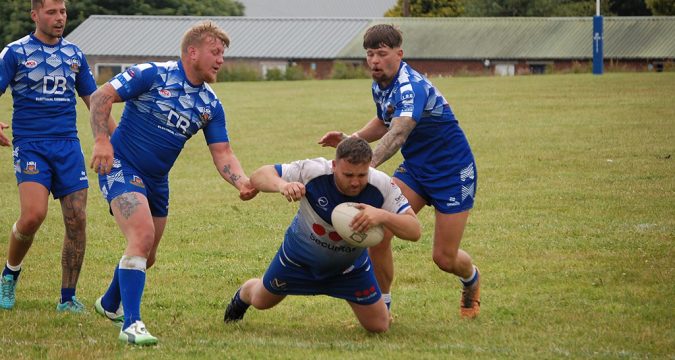
KELLY BARRETT, the Rugby Football League’s head of delivery (community game competitions) has further updated amateur clubs and leagues on developments regarding the National Community Rugby League (NCRL) initiative, which it is planned will kick-start next spring with the grassroots game operating on a more regionalised basis.
She said: “Following last week’s community club update, we’re pleased to confirm the details of the upcoming NCRL webinars.
“These sessions are designed to support clubs and volunteers with key information on the proposed 2026 competition structures and the next steps in the NCRL transition.
“We’re continuing to make strong progress in shaping the open age men’s structure for the 2026 season under the NCRL framework. This webinar will provide clubs with a clear overview of the proposed structure and allow space for questions and feedback.”
A webinar meeting will take place on Thursday (November 6), and Barrett advised: “A detailed document will be shared with clubs, outlining: a) proposed league structure and season format; b) key principles underpinning the 2026 model and c) alignment with NCRL governance and phased implementation and club entry timelines and operational expectations.
“This document is intended to support club review ahead of the webinar and will be accompanied by a summary sheet for ease of reference.”
She continued: “(The) primary, youth and junior Webinar session (on Wednesday, November 12) will focus on the development-led principles shaping the primary, youth and junior age groups, and provide clarity on regional planning and volunteer appointments.
“Topics include: a) key player development principles and rationale; b) draft seasonal calendars (subject to regional sign-off); c) overview of appointed volunteers to regional groups and d) next steps for off-season planning and 2026 readiness and reinforcement of the NCRL ethos (which is) inclusive, deregulated, and participant-led.
“This webinar will also outline how clubs can engage with their regional representatives and contribute to shaping final calendar details.”
Meanwhile, the British Amateur Rugby League Association has emailed district leagues setting out the situation, as it sees it, regarding the impact of the NCRL on BARLA and its district leagues.
Secretary Sue Taylor stated, last Tuesday evening: “The BARLA board asked for clarity on BARLA’s stance, to stop any misunderstandings or misinterpretations from district leagues.
“It is important to remember that BARLA does not operate any playing leagues. This update provides a clear overview of the NCRL framework and sets out how district leagues operate within it while maintaining BARLA’s governance and autonomy.
“The NCRL is the RFL’s new framework for the community game in England. It brings together open age, youth and junior, and primary Rugby League under a single, co-ordinated structure, while acknowledging the history and identity of existing leagues and organisations.
“The NCRL provides: a) a common set of terms of reference and competition rules to ensure consistency across community competitions; b) a clear governance model, including management groups and competition committees, giving volunteers and leagues a formal voice in decision-making; alignment with the RFL’s wider strategy, supporting sustainable competitions, safeguarding, and player welfare and c) a move away from fragmented approaches, towards a shared system that reduces duplication and strengthens nationwide standards.
“The aim is to connect all leagues within one national framework, so all parts of the community game operate under the same principles and standards.
“Existing competitions, such as the Pennine League and the Women’s Amateur Rugby League Association, will go through a period of transition into the NCRL framework. The RFL will work individually with each competition to align with the national framework.
“District Leagues fall under the governance of BARLA, and as a reminder, BARLA is a separate entity from the RFL.
“As set out in the RFL articles of association, BARLA and the RFL shall remain as separate organisations and, for the avoidance of doubt, the RFL shall not have the power either to amend the constitution of BARLA or to dissolve BARLA.
“Under the NCRL framework, district leagues will continue to operate within BARLA’s governance and the RFL will oversee the entire playing calendar to monitor load and ensure an appropriate mix of playing opportunities.
“Any fixtures arranged by district leagues must be approved by the RFL through the NCRL framework. On that basis, it would be helpful if we could get an early understanding of the proposed activity.
“Please note that the calendar for open age, youth, and junior activity is changing, so it may not always be possible to fit in district league games. This ensures co-ordination and prevents clashes across competitions.”
In stressing that BARLA remains a member of the RFL and will continue to be represented on both the RFL Council and the RFL Community Board, Taylor’s email continued: “BARLA retains full control over any funding it holds or receives.
“Decisions regarding the use, allocation, or management of BARLA-held funds are solely for BARLA to determine. The RFL does not have authority over BARLA’s financial matters, nor does the NCRL framework alter this arrangement.
“BARLA remains a member of the RFL and will continue to be represented on both the RFL Council and the RFL Community Board. Hopefully, the above addresses district leagues’ concerns.”