
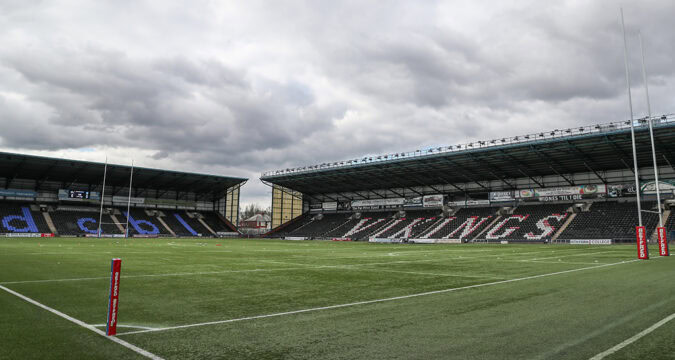
WIDNES VIKINGS could be involved in managing their home stadium as cash-strapped current owners and operators Halton Borough Council consider a range of options which include selling the 13,200-capacity ground.
The authority, also responsible for neighbouring town Runcorn, are assessing the future of the DCBL Stadium, which has an artificial pitch. It wants to commission a feasibility study to examine various options for its use and running.
The construction of the current stadium on the site of Widnes’ previous Naughton Park home began in August 1996 via a joint-venture company created by the council and the club.
The council took full ownership in January 1999 and the venue was completed in August of that year.
As well as hosting various other sports and community clubs, it has served as a base for concerts, conferences and meetings, weddings and other functions and as office premises for the council.
Now documents state: “The council’s financial position requires the council to review its land and property assets, and the stadium is no exception.
“It is the right time to consider whether the current role of the stadium is ‘fit for purpose’ and there is a need to set out a long-term vision for the stadium.”
The sale of the stadium would generate capital for an authority recently given a £35 million Government loan to balance the books – but other options are being considered.
The council could continue its direct management, a third-party firm could be appointed to run it, or a company made up of the council and tenants including the Vikings and non-league football club Widnes Town could be set up.
The council also wants to look into the best use of the asset.
One possibility is for the stadium to become the authority’s administrative headquarters.
Earlier this year, the council announced plans to relocate many of its functions from the Municipal Building in Widnes, knock it down and sell the site in an effort to cut costs and raise revenue.
A council spokesperson said: “The stadium is a much-loved and valued asset, but it is worth considering whether it is reaching its full potential, hence the need to set out a long-term plan which plays to its strengths and maximises potential opportunities.”